Makeup Hygiene: Caring for Brushes, Sponges and Eye Makeup
Build a practical makeup hygiene routine for brushes, reusable sponges and eye cosmetics, with sensible cleaning and storage habits.
Makeup care is easier when it is part of the routine rather than a task saved for the bottom of the to-do list. Products and tools travel between shelves, bags and faces, so a little organization can make regular cleaning and careful handling much more manageable.
Begin with the items you use most often. A small, clean everyday kit can be easier to maintain than a crowded collection whose tools and opening dates are difficult to track.
Give clean and used tools separate places
Choose a place for clean tools and another for those waiting to be washed. That simple separation makes it easier to see what is ready to use. Leave enough space for brushes to dry fully before they return to a pouch or container.
Wash your hands before applying eye cosmetics and keep the tools used around your eyes clean, as the FDA recommends. Keep lids secure and product containers clean. Put the items you reach for every day somewhere you can access without searching through the whole kit.
Schedule a regular brush wash
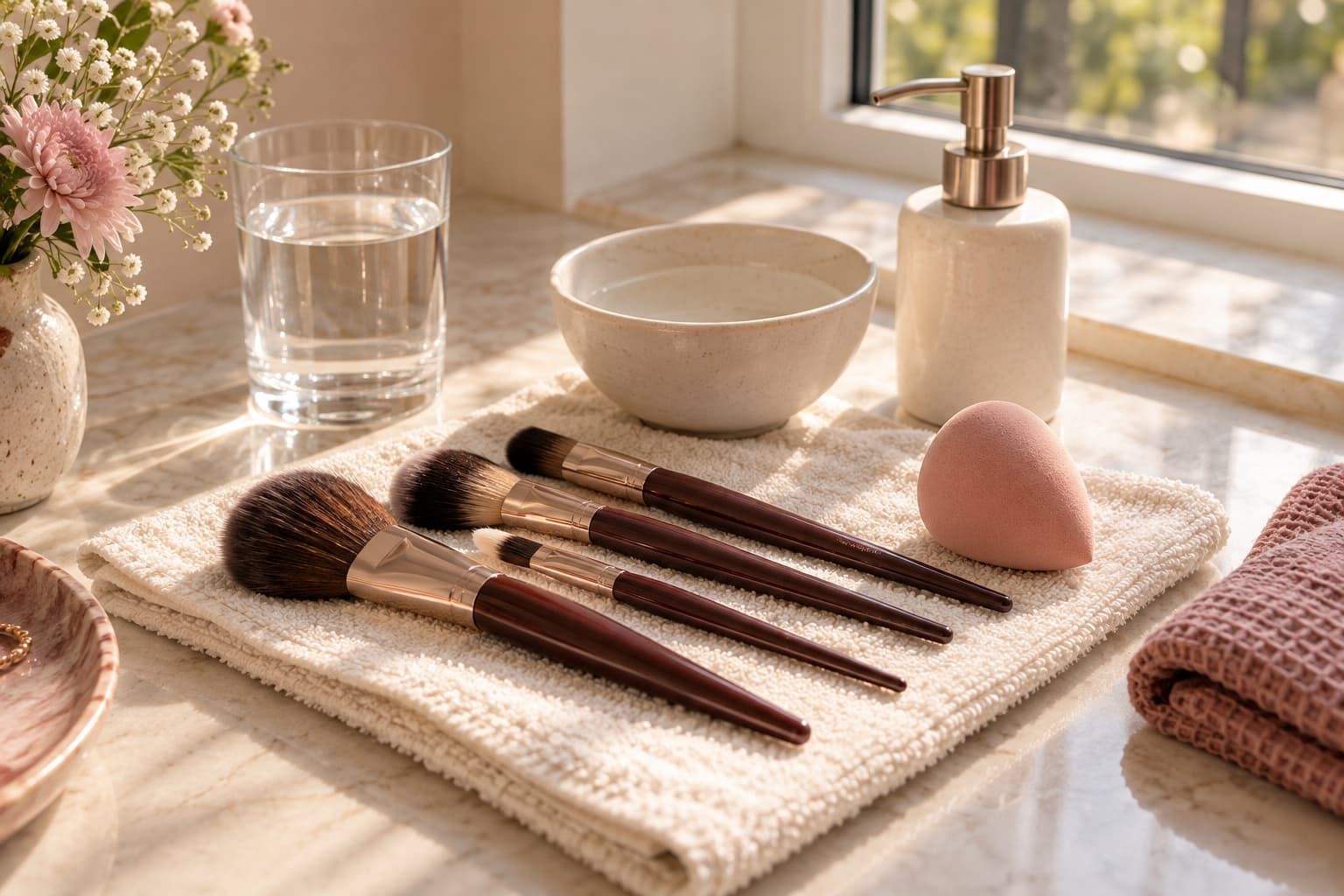
The American Academy of Dermatology recommends washing makeup brushes every seven to ten days. Rinse the tips in lukewarm water, clean them with gentle shampoo, and rinse until the water runs clear. Avoid soaking the whole brush head, which can loosen the glue connecting it to the handle.
Remove excess moisture and lay brushes flat with the tips extending over the edge of a surface. Choose a recurring time when they can dry without being needed immediately. Put a reminder beside the supplies if that helps the habit stick.
Care for reusable sponges after use
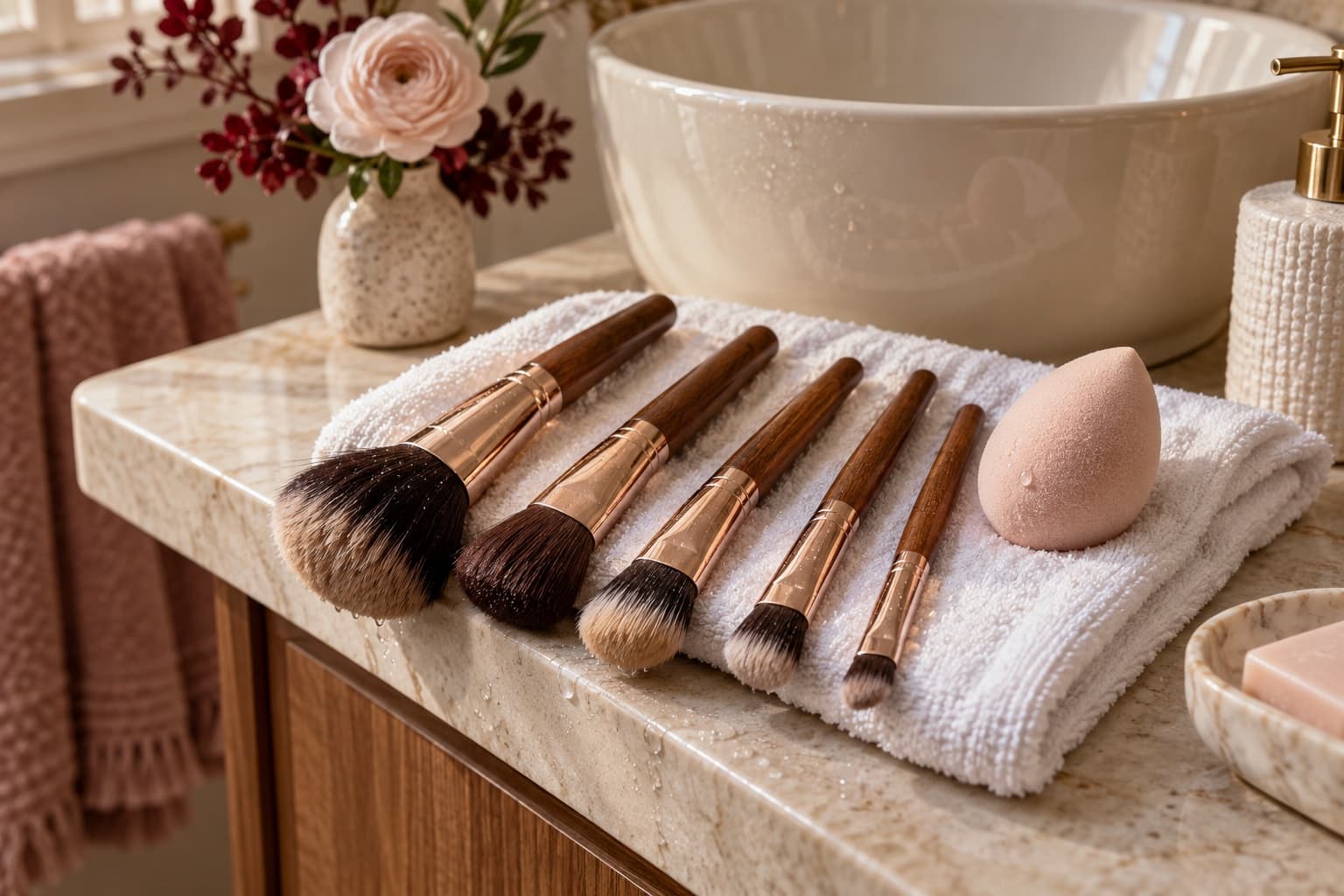
The AAD advises cleaning reusable makeup sponges after every use. Wash with cleanser and water, rinse thoroughly, squeeze out excess water and leave the sponge to air-dry on a clean surface. Follow any additional care directions supplied with your tool.
Plan a drying place before you start. If you routinely pack a kit for travel, check which tools will be dry and ready rather than closing a damp sponge inside a bag. Keep your cleaning supplies nearby so the extra step is straightforward.
Handle eye products with care
Use products specifically intended for the eye area. The FDA advises against sharing cosmetics, adding water or saliva to dried mascara, and applying eye makeup in a moving vehicle. It recommends discarding mascara three months after purchase. Keep a dated note so you do not have to guess how old it is.
If an eye cosmetic irritates your eyes, stop using it; persistent irritation needs medical advice. Do not use eye cosmetics during an eye infection, and discard the products you were using when the infection occurred.
Reset the kit before a celebration
The day before an event, choose the few items you expect to use and check that their tools are clean and dry. This is also a good moment to review product labels, close loose lids and remove anything you no longer use.
Keep personal touch-up products personal. A small mirror, your selected lip color and tissues can be easier to manage than bringing the entire collection. After the celebration, empty the pouch so used tools return to their cleaning place instead of staying hidden until the next event.
Keep In Mind
- Choose a recurring brush-cleaning day.
- Keep a note of mascara purchase dates.
- Let reusable tools dry before storing them.
Common Questions
How often should I wash makeup brushes?
The AAD recommends every seven to ten days. Choose a recurring reminder and allow enough drying time before you need the brushes again.
Can I add water to mascara when it dries out?
No. The FDA advises discarding dried mascara rather than adding water or saliva, which can introduce bacteria or affect its preservatives.